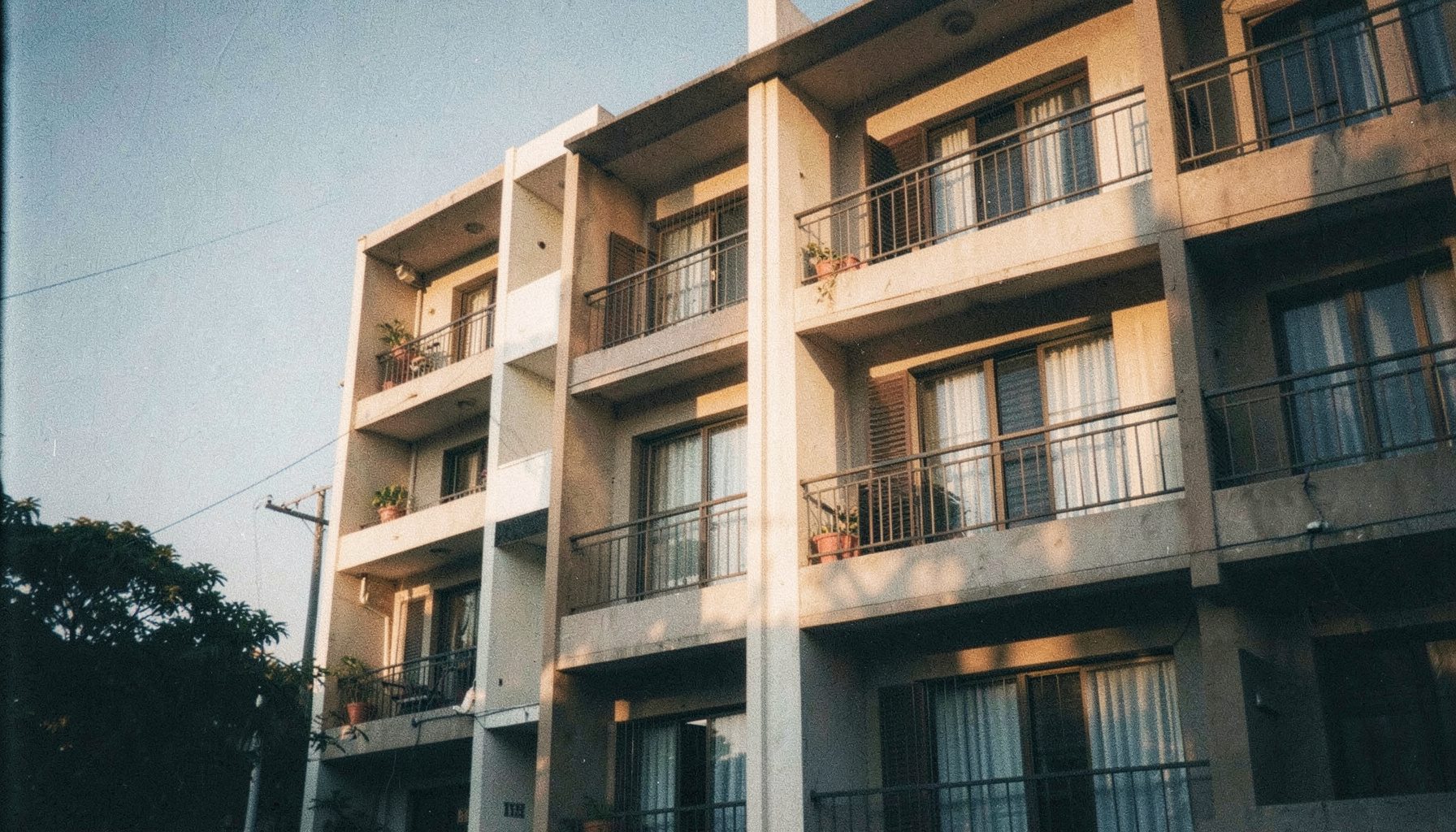
What Maintenance Charges Really Cover and How to Negotiate
Apartment maintenance charges are recurring payments used to run and maintain the shared parts of a residential building. In India, residents may call them society maintenance, service charges, common-area maintenance or CAM charges. They commonly pay for security, housekeeping, lifts, generators, common lighting, water and waste services. A buyer can negotiate the sale price, yet cannot treat this monthly obligation as a minor extra.
For Australians comparing homes in Mumbai, Navi Mumbai, Pune, Raigad, Palghar or Lonavala, the figure can be as important as the headline property price. The same flat may carry different charges because of its location, floor area, building design and management. Understanding what is included, what is excluded and who can change the amount prevents a cheap purchase from becoming an expensive long-term holding.
Why the Numbers Look Different
There is no universal Indian maintenance tariff. A society might divide expected costs among owners equally, calculate each owner’s share by carpet or built-up area, or weight the calculation by floor, lift usage and the number of units. Some committees issue an invoice per square foot; others publish a monthly amount per household. The collection method should be traced to the society’s rules and approved budgets, not assumed from a listing.
Even identical apartments can differ. A tower with three lifts and a basement car park has more operating and insurance costs than a low-rise block with a single lift. A property beside a busy road may need more cleaning and security, while a remote township can face higher generator and service costs. Occupancy matters too: a building with fewer residents often carries the same fixed expenses across fewer paying households.
An owner intending to rent out a unit should include these costs in the lease and income calculation. Owners considering renting a second home in Lonavala also need to understand seasonal occupancy and how vacant periods affect the society’s income. A unit that is empty for months does not necessarily have a lower bill, because security, common electricity and lift servicing continue.
What the Money Is Expected to Cover
A typical monthly payment covers day-to-day operations: guards, housekeeping, landscaping, pest control, common-area electricity and water, lift maintenance, generator fuel, waste disposal and the building insurance required by the society. Some bills are bundled, while others sit outside maintenance and are paid separately. Ask whether parking charges, water billing, gas, electricity, broadband and club fees are included.
It is also important to separate housing charges from one-off brokerage. A rental brokerage comparison across major Indian cities shows why commission structures can vary, but a zero-brokerage arrangement does not remove recurring building costs. A tenant may save on an upfront agent fee and still owe the owner or society monthly amounts. The lease should identify each payer rather than use the broad term “charges” for everything.
A credible budget should also plan for reserve funds and major repairs. In some buildings this is called a sinking fund or corpus fund; elsewhere, money is set aside for capital works such as lift replacement, façade repairs or waterproofing. If the reserve is thin, the committee may announce a special contribution or larger monthly increase. Check arrears, planned projects, contractor contracts and whether any contribution is overdue.
Location, Age and Building Quality
Geography changes the operating baseline. Water treatment, labour, transport, waste handling, local taxes and weather-related maintenance all affect costs. A coastal Mumbai or Navi Mumbai property can face high-density security and monsoon-related upkeep, while Lonavala properties may carry sharper seasonal swings because of hill access, rainfall and intermittent occupation. Local limits on water use, generator hours and common-area access can also influence what a committee can spend.
Building age and specification can matter more than the society’s claimed prestige. Older lifts, pumps, wiring and waterproofing may need frequent attention, while a new clubhouse, imported finishes or a large landscaped courtyard can add recurring expense. Evaluate the service history, replacement cycle and energy consumption. A lower maintenance figure is attractive only if the committee is adequately funding the assets that protect the home’s value and livability.
New-project prices often use a promoter’s estimate, whereas resale figures reflect the actual operating history of the occupied building. The handover from developer-managed to resident-managed facilities can change staffing and billing. Compare the first full occupancy budget, not only the launch advertisement. If a project is sold as fully serviced, clarify whether the quoted charge includes amenities that are currently closed, unavailable or operating at a loss.
Governance and Shared Infrastructure
Maintenance is not purely technical; it depends on governance. In Maharashtra, co-operative housing societies operate under frameworks including the Maharashtra Co-operative Housing Societies Act 1960, while their internal bye-laws and member decisions determine many collection and spending practices. Committee elections, meeting minutes and approved budgets therefore matter. A high charge supported by transparent spending and reserves can be healthier than an artificially low charge that leaves the building unprepared.
Shared-infrastructure costs also depend on decisions made before individual homes are sold. The Hyde Park development review explains one project’s role within a wider urban plan, illustrating how public improvements and parcel-level commitments can reshape the cost base around property. The Chicago example is not an Indian pricing benchmark, but it makes a useful point: a building’s future costs cannot be assessed separately from infrastructure obligations and the parties responsible for delivering them.
Australian buyers purchasing remotely should obtain the society’s constitution or bye-laws, recent minutes, two years of accounts and a written explanation of major liabilities. Local advice can be more valuable than another glossy brochure. Ask a Mumbai property lawyer or chartered accountant to review the title, society charges and authority to let, and consider a power of attorney for ongoing correspondence. Keep all approvals in a shared, securely documented file.
Lessons From Australian Apartment Markets
Australian apartment owners know the same concept under different names: body corporate levies in Queensland, strata levies in New South Wales, owners corporation fees in Victoria and unit title levies in the ACT. In Sydney, Melbourne and Brisbane, these are usually quarterly or periodic bills on top of council rates, water and mortgage repayments. A home purchase can look affordable on price alone while the levy is omitted from the borrowing estimate.
State legislation confirms that there is no single national formula. In New South Wales, the Strata Schemes Management Act 2011 governs strata schemes, with contributions commonly separated into administrative and capital works funds under a sectional owners corporation. Queensland’s Body Corporate and Community Management Act 1997 similarly requires body corporates to keep money for different purposes and plan for foreseeable major works. These distinctions mirror India’s separation between daily expenses and reserve or sinking funds.
Everyday habits differ, but the diligence is familiar. Many Australian owners download levy statements, read meeting reports, compare the budget with actual expenditure and query special levies through formal notices. In Victoria, the Owners Corporations Act 2022 places budget and major-decision processes within the owners corporation’s annual meeting framework. Special assessments for lift or roof work can be substantial, so reserve balances should be checked before an apartment is bought. The lesson transfers: recurring fees deserve the same attention as the bond and mortgage.
Comparing Two Properties Fairly
Start by requesting the current budget, the previous two years’ actual expenditure, the latest audited or independently reviewed accounts, and the bank balance for reserve funds. Obtain the due register or arrears list, subject to privacy rules, and a schedule of planned capital work. Ask for invoices behind the three largest cost headings rather than accepting a single annual total. If figures are unavailable, treat the uncertainty as a negotiating issue.
Normalise each property before comparing it. Record the monthly total and the charge per square foot, then add separately billed utilities, parking and one-off levies that the seller expects to continue. Check whether the quoted area is carpet area or built-up area. For an Australian investor, convert the full obligation into Australian dollars and include vacancy, letting-management costs and likely future special contributions in the ownership calculation.
Digital tools can speed this work. The BargainFlatsIndia platform, operated by Hamilton Greens Pvt. Ltd., a subsidiary of The GTC Group, offers search and comparison features for new projects, resale homes and rentals in its focus markets, plus an EMI calculator. Those tools help compare financing and listing details, but the EMI output does not include society maintenance. For rentals, confirm whether the advertised rent includes building services, and for resale homes, ask for the actual bill rather than the developer’s estimate.
A Practical Negotiation Strategy
Negotiation usually works best before completion. Ask the seller for the current monthly invoice, outstanding dues, the latest budget and evidence that major repairs have been funded. Where arrears exist, seek written agreement that the seller clears them or gives the buyer a settlement credit. A modest adjustment to the purchase price may be justified if the buyer will inherit an underfunded reserve, an expired lift service contract or a soon-to-be special levy.
Negotiating a reduction through the society is a separate process. A formal proposal might phase in an increase, move a disputed amenity to optional use, or request clearer reporting and a vote on reserve priorities. Any change must comply with the society’s rules and applicable law; it should not reduce essential maintenance or conceal costs. Bring supporting accounts and a practical funding plan, because a committee is more likely to discuss a proposal that protects service quality and owner voting rights.
For a buyer acting from Australia, put key protections in the sale agreement and have them reviewed locally. Conditions can cover the disclosure of dues, clearance of arrears, access to society records, handover of utility accounts and a statement of approved capital works. Ensure that any local representative can inspect the flat, attend a meeting and respond to a lift shutdown or water interruption. A limited power of attorney can be more useful than a broad mandate made without understanding the building’s procedures.
Walk away or reprice when the record is weak, not merely when the number looks high. Warning signs include unexplained arrears, no reserve balance despite major lifts, repeated emergency repairs, unclear water charges, long periods of unaccounted amenity costs and minutes that are unavailable to owners. Conversely, a transparent charge supported by sound accounts, funded reserves and a credible maintenance plan may be the safer long-term purchase. Price the recurring obligation as carefully as the property itself.