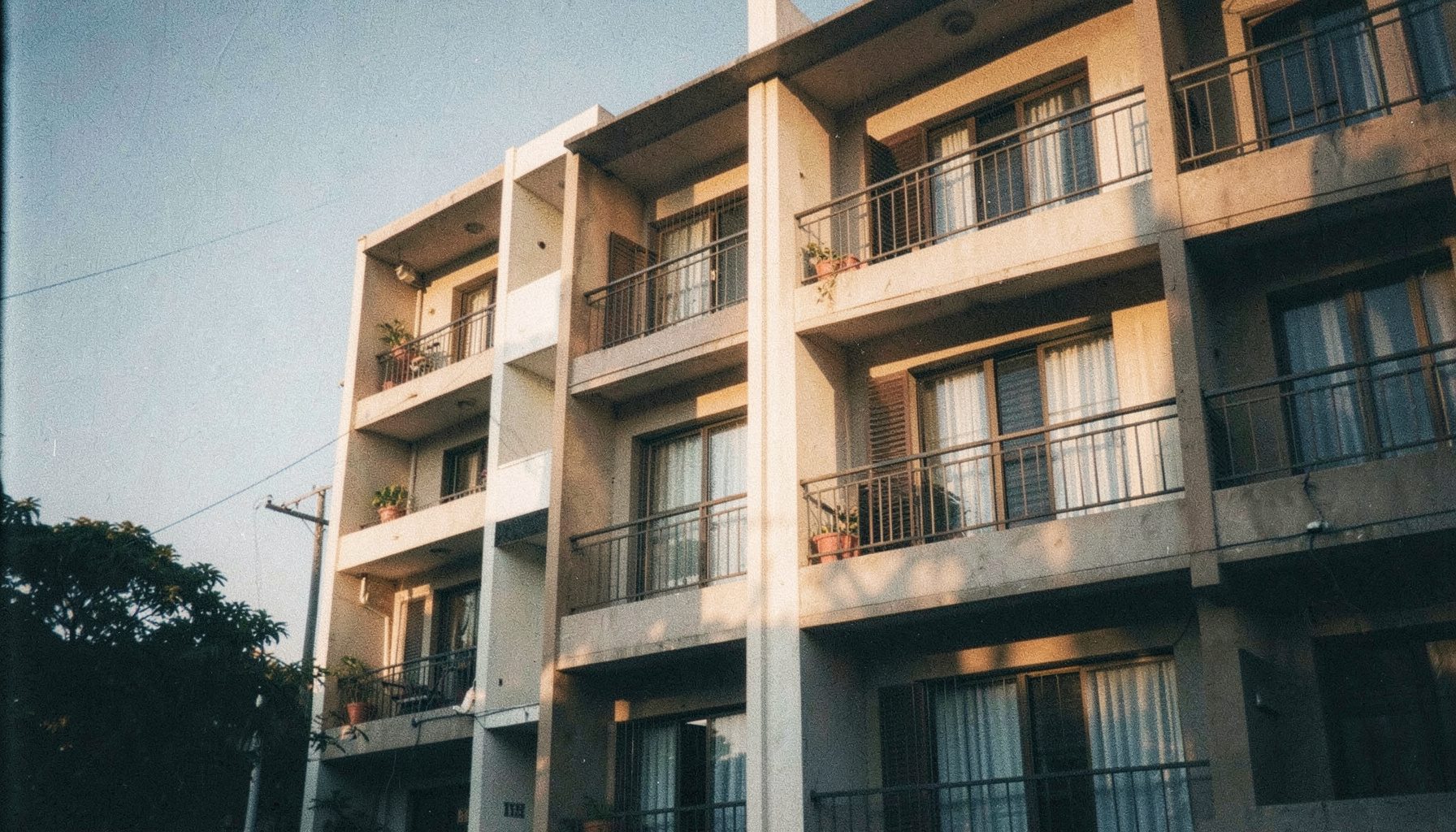
Smart home features: what are worth the money in apartments?
Smart home features earn their keep when they solve a problem in an apartment, not merely when they look impressive during a viewing. Reliable cooling, useful blinds, secure entry and internet that holds up at peak time usually matter more than a voice assistant with a long list of tricks. The strongest package is the one that suits the building, its wiring and your daily routine.
In Australian cities, apartments are commonly managed through a strata or owners corporation, often called the body corp. Buyers in Sydney, Melbourne and Brisbane also need to understand shared facilities, special levies and building rules because some functions are already covered while others must be installed privately. That makes connected devices an operating-cost decision, not just another decor choice.
Start with the building, not the gadgets
Begin with the strata records, not a showroom. Ask for recent minutes, the sinking fund balance, planned major works and any rules on alterations. A building with a good gym, concierge and secure lobby may deliver more daily value than privately installed cameras. In Melbourne, a traditional walk-up with little shared technology needs a different plan from a newer Sydney tower full of communal amenities.
Check the basics before choosing a hub: switchboard capacity, internet delivery, lighting circuits, balcony power and where the meters sit. An electrician can spot whether switches have neutral wiring or whether the board has room for extra modules. If there is no neutral, wireless switches may cost more once batteries and replacement bulbs are counted.
A gadget cannot cure a legal defect. For a resale apartment in Mumbai, buyers should verify the title deed before paying for automation, just as Australian buyers check the contract, body corp records and building manager’s notes. Clear ownership and a sound building matter more than an app that promises perfect control.
Connectivity that survives the move-in
Ask the agent or body corp which network reaches the apartment, then confirm it for the exact address. NBN access is commonly described as FTTP, HFC, Ethernet, fixed wireless or satellite; these are not interchangeable. Fibre-to-the-premises and wired Ethernet usually suit connected devices best, while fixed wireless can still be reliable. A mobile backup is useful, but it is not the same as a fixed connection.
Plan the network as one system. A dual-band router or mesh unit placed centrally can help with thick walls and concrete lift shafts, while wired points are often more dependable for a home office. Smart lights, locks and cameras may all demand stable 2.4 GHz Wi-Fi, even if phones prefer the faster band. Check how many devices the system supports and whether a failed hub disables everything.
Choose fewer ecosystems and fewer cloud dependencies. Matter has improved cross-brand compatibility, though support still varies, and a local automation hub can keep schedules working when the internet drops. For imported products, confirm Australian voltage, plug type, warranty and local app support. A device that says it works with an assistant is not necessarily a complete, serviceable system.
Comfort tailored to Australian apartments
Climate control is among the strongest value choices for Australian apartments. A ducted reverse-cycle system with an inverter and zoning can improve comfort while avoiding the repeated running cost of several split units. In a Brisbane summer, top-floor heat and western-facing windows are worth testing; in Melbourne, a quick heating boost may matter more. A smart controller earns its place only if it runs sensible schedules rather than merely displaying a temperature.
Motorised blinds can cut glare, preserve privacy and help an air conditioner work more efficiently. Check blackout performance separately from light filtering because many blackout fabrics still leak some light. Ask whether remotes are wall-mounted, whether the motor can be serviced and how the battery is replaced. Outdoor or balcony blinds must also comply with wind limits and body corp rules.
Ceiling fans remain the workhorse in Australian homes, especially in NSW where they are required in habitable rooms. Smart versions should retain familiar pull-chain or wall controls where possible; forcing everyone to open an app is poor design. Sensors are useful for detecting an open door or a hot room, but reliable schedules and manual overrides often deliver more value than a long list of automated scenes.
Security that does not create new problems
A smart lock can remove keys from a household routine, but it should not remove the ability to get in. Look for an integrated deadbolt, a mechanical override and a clear battery warning. Auto-lock can be useful for a home office, yet it may repeatedly fail against a swollen door in humid weather. Fingerprint readers can also struggle with wet or dirty fingers, so retain a PIN and a physical backup.
Shared entrances change the security calculation. A lobby with an intercom, key fob and concierge may already handle the main risks, leaving an apartment video doorbell useful for parcels rather than burglary. Check whether the camera supports local storage without a subscription, and whether a proprietary hub remains usable if the internet service ends. In a shared building, visible cameras and a privacy notice are important.
Water protection often brings a better return than another camera. Leak sensors near the kitchen, bathroom and laundry can alert you before a cabinet or neighbouring unit is damaged. An automatic shutoff valve requires correct placement, professional installation and reliable power; a cheap sensor alone cannot stop water. Ask insurers and the owners corporation about responsibilities because shared infrastructure and private fittings may be covered differently.
Lighting, voice and genuine convenience
Smart lighting can be genuinely useful when it removes switches from the dark corners of a home, particularly in a walk-up with dim corridors. Tunable white bulbs are usually more worthwhile than colour bulbs for everyday comfort, and local dimmers often work better than replacing every lamp with a connected bulb. Fewer, properly placed controls can also look tidier than a wall crowded with modules.
Voice control is worth keeping for simple, repeatable jobs: dimming the living room, starting a routine or checking a sensor while your hands are full. It adds little when a routine must be relearned every few months. Check microphone controls, account requirements and whether the assistant understands Australian English, local accents and Australian place names.
The electrical details can determine the value of the whole setup. Australian switches run on 230 volts, but older wiring may lack a neutral conductor, and some cheap modules are not designed for local load requirements. A licensed electrician should confirm compatibility before devices are boxed in. One well-supported wall switch can be worth more than a dozen novelty plugs that need the same hub.
On BargainFlatsIndia, owners in Mumbai can post their property with the correct model numbers, warranty details and a note of which devices remain. Australian sellers can do the same through their agent, including controller reset instructions and smart-lock ownership, so the next buyer is not left with a hub full of strangers’ accounts.
Energy savings you can measure
An energy monitor can make savings visible, but it does not create them by itself. Whole-home monitoring shows when a heat pump or oven draws power; appliance plugs can identify individual loads, although they add cost and occupy sockets. Compare readings with the electricity bill before and after a change. In a body corp building, ask whether the energy data covers individual units or only the common-area supply.
Solar, batteries and electric-vehicle charging can add value in some apartments, yet the apartment may constrain every part of the system. Roof access, balcony loading, inverter placement, metering and export arrangements often need body corp approval and suitable wiring. Shared solar may provide a modest credit without giving each owner a dedicated panel. A smart meter is useful only if the building’s electrical setup supports the equipment you want.
The strongest measurable savings usually come from an efficient appliance, correct insulation, sensible temperature settings and avoiding standby loads. A connected thermostat can help, but schedules should follow occupancy rather than an empty flat running all day. Aftercare counts too: filters need cleaning, batteries need testing, and a subscription tied to historical data can weaken the case for an otherwise sensible purchase.
Value beyond the sales pitch
Treat upgrades as a hierarchy. Start with safety, dependable climate control and a stable network; then add convenience. Before buying, price the complete job, including installation, hubs, ongoing subscriptions, replacement batteries and the work needed when you sell. In Australia, budget in Australian dollars and allow for GST on many products and contracted services. A feature that saves twenty minutes but costs several hundred dollars may still be a personal luxury rather than good value.
It is tempting to treat a shopping list like a run of sure things. An explanation of a casino betting strategy demonstrates how a neat progression can create an illusion of control; an apartment upgrade should instead be judged on usage, running costs and compatibility. One excellent video doorbell may satisfy the household’s security needs, while a second camera in the same hallway mostly adds storage fees and privacy concerns.
Set the spending limit before the showroom tour, then compare each feature against the first three priorities: comfort, safety and connection. Cheap devices still carry labour, subscriptions and maintenance, while premium devices can lose value quickly if they cannot be handed over with the apartment. The best connected apartment is often the one a household operates without thinking about it.
| Upgrade | Best use | Buy it when | Check first |
|---|---|---|---|
| Ducted reverse-cycle | Heating and cooling | An inverter and zoning suit the layout | Installation, roof rules and filters |
| Motorised blinds | Heat, glare and privacy | The motor is serviceable and locally controllable | Wind limits and battery access |
| Smart switches | Lighting and routines | Existing wiring suits the modules | Neutral wire and electrician costs |
| Smart lighting | Task and ambient lighting | Tunable white is enough for most rooms | Hub dependence and replacement costs |
| Video doorbell | Visitors and parcels | Local storage and backup power are supported | Fees, privacy and shared-area rules |
| Smart lock | Key-free access | It includes a mechanical override | Battery life, humidity and auto-lock |
| Leak sensor | Early fault detection | Plumbing or appliances carry a known risk | Battery status and professional valve work |
| Energy monitor | Tracking consumption | Solar or major loads are already present | Subscriptions, data sharing and detail |
| Voice assistant | Hands-free routines | Tasks are simple and repeat regularly | Privacy, accounts and cloud dependency |